By Dhannya Vitta Chandra (Rachel House Volunteer)
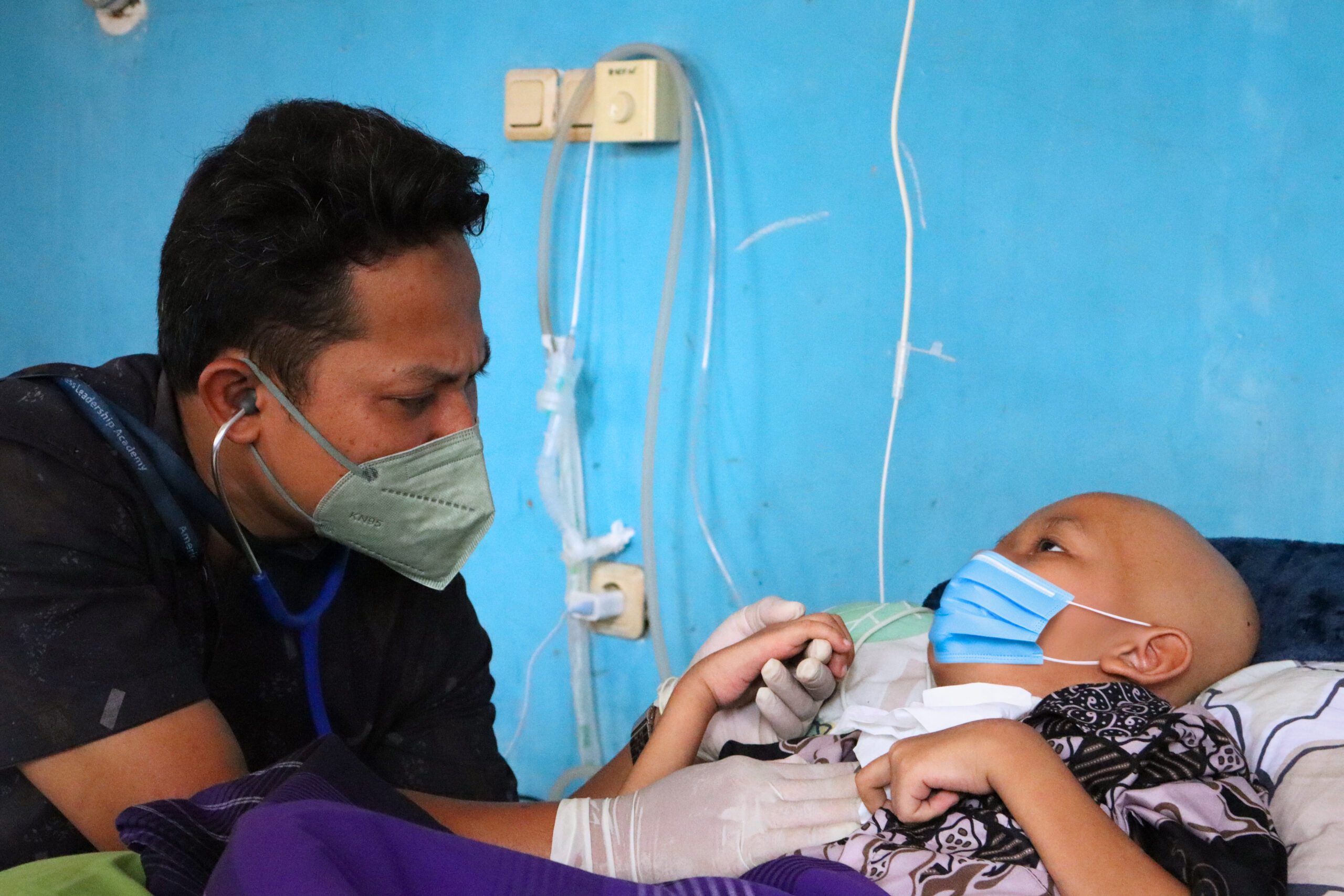
In a world that rushes past pain, there are still people who pause.
Not to fix it. Not to flee from it. But to sit beside it — gently, patiently — and carry what they can.
At Rachel House, I met someone like that. A man whose strength isn’t loud, whose work rarely makes headlines, but whose presence changes everything. He doesn’t come with speeches or stethoscopes alone. He comes with time. With trust. With the quiet kind of love that stays long after the world says goodbye.
His name is Pak* Dadan.
And once you witness the way he walks beside children and families, especially in their most fragile moments, you understand — this is what it means to care, not just in practice, but in spirit.
…………………………………………………………………………………………….
For more than a decade, Pak Dadan has stepped quietly into homes where most people would hesitate to knock. These aren’t places of comfort. They’re rooms filled with oxygen machines and silence, with tired walls and worn-out hope. In these small, often overlooked spaces, he brings something most have forgotten — presence.
He doesn’t come with grand speeches or promises. He comes with a backpack over his shoulder, a calm voice, and a heart that doesn’t flinch in the face of pain. He is not just a nurse. He is someone who stays.
Even after a child has gone, he remembers their laugh, their voice, the way they held his hand. He keeps their photos. He saves their voice notes. He still visits the families. Because for him, caring doesn’t end when someone takes their last breath. It continues — quietly, steadily, with love.
Among the many children he’s cared for, there is one whose story he carries like a quiet prayer — a small boy named Tegar.
Tegar was only six. A little boy who had already lost more than most people do in a lifetime. He was a yatim piatu — both parents gone — left in the care of uncles who were doing what they could just to survive. They had no time, no resources, and no idea how to care for a child as sick as Tegar.
But Pak Dadan did.
Tegar had HIV. His condition required hospital visits, tests, and medication — medication that often made him nauseous, or that he simply refused to take. Most people would’ve given up. But not him. Every appointment, every emergency, Pak Dadan was there — riding his own motorbike across Jakarta, no matter the rain, the heat, or how exhausted he was. There was no Grab, no hospital transport. Just love.
At home, Tegar’s condition was difficult. He was so weak he could no longer clean himself. There were days when diarrhea left him crying on the floor. And yet, with quiet grace, Pak Dadan would bathe him, clean him with his own hands, wrap him in soft towels, and sit beside him through the long, sleepless nights.
He never once treated Tegar like a burden. He treated him like family.
One day, they brought Tegar to Taman Safari. A volunteer from Japan had helped arrange the visit. Tegar had never seen an elephant or a giraffe before. In fact, until then, he thought the only animals in the world were chickens and cats. That day, he laughed for hours. That day, he wasn’t a patient — he was just a little boy, pointing, shouting, smiling at things he never knew existed.
But even joy cannot stop the body from fading. Tegar grew weaker. Yet somewhere in him, something remained alive — a memory, a connection, something unspoken.
One afternoon, during a hospital visit, he quietly slipped away from Pak Dadan’s side. At first, there was a flicker of panic. But instead of calling out, Pak Dadan followed.
The boy moved with intent. Through corridors, past stairwells, out onto a quiet street — until he stopped in front of a small roadside bakso stall.
He didn’t say a word. He just stood there, staring at the bubbling pot.
The vendor noticed them, looked at Tegar, then at the man beside him, and asked gently,
“Pak… may I know who you are to this boy?” (“Pak… kalau boleh tahu, Bapak ini siapa nya anak ini?”)
Pak Dadan looked at him for a moment, then said quietly, “I am caring for him.” (“Saya yang rawat.”)
The vendor’s face shifted, recognition dawning in his eyes. He glanced at Tegar again, then whispered, “His mother used to come often and buy bakso.. When she was sick.” (“Ibunya dulu sering beli bakso di sini juga… waktu dia masih sakit.”)
It wasn’t a coincidence. Somehow, through memory or something deeper, Tegar had brought himself back to where his mother once stood. To the smell, the warmth, the corner she must have known well. A mother and a son, gone too soon — remembered by the same man who stood between them.
When Tegar’s time came, it was slow and quiet. His breaths grew further apart, his voice softened to a whisper, and the light behind his eyes dimmed gently, like a curtain being drawn. And when that moment came, Pak Dadan was there — not just for Tegar, but for the family that had grown around him. He stayed through the night. He whispered prayers. He held the boy’s hand. He didn’t rush away. He never does.
Because this — this wasn’t the first time he had done this.
And it wouldn’t be the last.
Pak Dadan has waited beside many beds. He has sat with families through the final days of their children’s lives, time and time again. He has seen the quiet fear in a mother’s eyes, has heard the silent questions no one dares to ask. And he has always stayed — guiding them through the darkness, preparing them gently for what’s to come, never letting them face it alone.
He has witnessed more last breaths than anyone should. And yet, he still prays at each one like it’s the first. He still holds every goodbye as sacred.
There are other stories too. Stories of teenagers who rejected him, locked him out, told him to go away — and still, he waited outside. Not for minutes. Sometimes hours. Until the door finally opened. Or the stories of children once expected to die within months who are now in university, sending him updates, calling him “Pak,” still.
“Teenagers are different,” he says with a soft laugh. “You can’t just tell them what to do. You have to understand them. You have to earn them.”
To him, being a nurse is not a job. It’s a way of loving. A way of staying when things get hard, and of continuing to stay long after everyone else has gone home.
This is what it means to be a nurse at Rachel House.
Not just to treat.
But to stay.
To carry.
To remember. And to love — long after the world has let go.
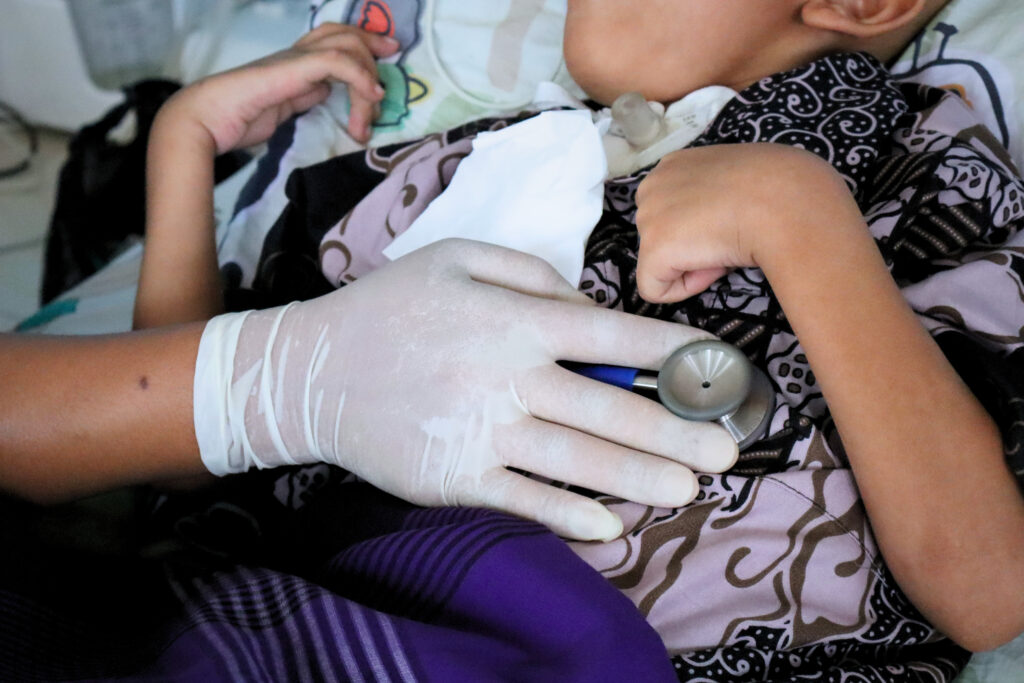
Photo by Sri Wildani — Communications & Fundraising Officer
*Pak is a shortened, informal version of “bapak”, a polite and respectful way to address an older man, similar to “Mr”.